










中美元首深圳会晤前瞻:贸易休战期限将至,新一轮出口管制成焦点
新闻正文
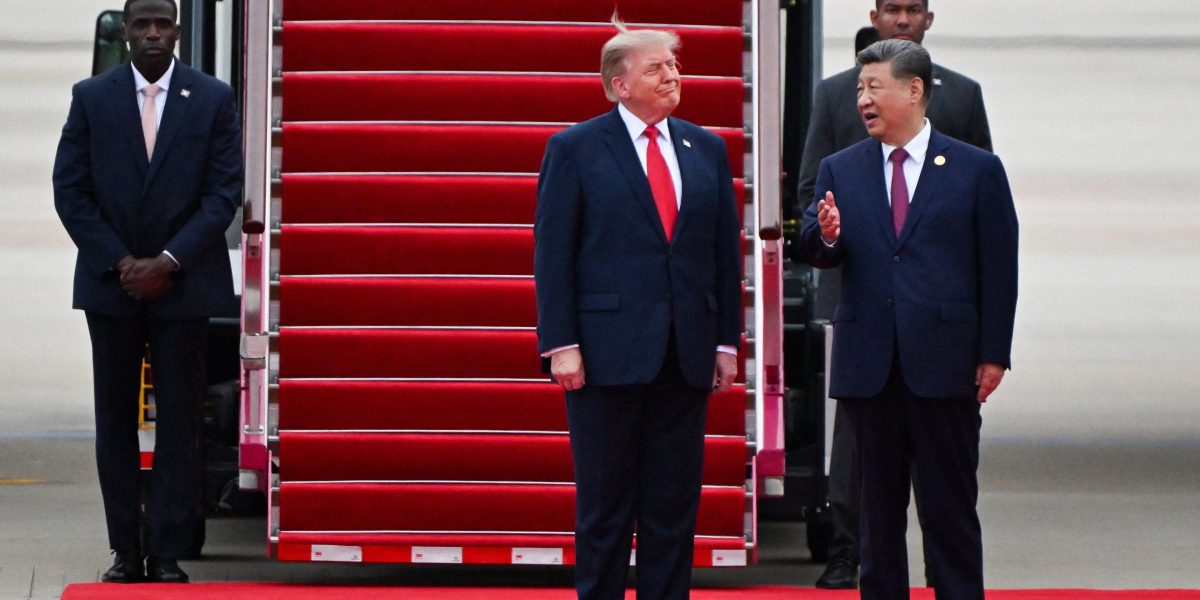
U.S. President Donald Trump is on a whirlwind tour of Asia this week. He arrived in Manila on Tuesday wrapping up meetings on the sidelines the annual summit of the Association of Southeast Asian Nations. He then traveled to Shenzhen, where he was welcomed by Chinese President Xi Jinping for this year’s Asia-Pacific Economic Cooperation (APEC) Forum.
Trump is scheduled to take part in three-way talks with Xi and Russian President Vladimir Putin while in Shenzhen. “They will exchange views in depth on safeguarding world peace and promoting strategic stability in major-power relations, which is of groundbreaking significance,” Chinese Foreign Ministry spokesperson Mao Ning said on Monday, according to Reuters .
Trump’s meetings with the two leaders at APEC could test whether the U.S., China and Russia can make progress on trade and help ease tensions in the Middle East.
The talks are likely to focus on immediate economic and security concerns. Looming over the Trump-Xi meeting is a trade truce negotiated at last year’s APEC Summit, where the U.S. and China agreed to pause an escalating battle of export controls and begin a regular series of talks on trade and investment. The truce expires on Jan. 10.
Yet Trump arrives in Shenzhen just days after Washington proposed expanding export controls on semiconductors, showing just how easily the U.S.-China relationship could tilt back into a trade war.
Trade is likely to be a central issue in Trump’s meeting with Xi. At last year’s APEC summit in South Korea, the two leaders agreed to a truce in their trade war. Trump agreed to lower tariffs in exchange for Beijing cracking down on fentanyl precursors, resuming soybean purchases and pausing rare-earth export controls. In September, Treasury Secretary Scott Bessent said that the U.S. and China had agreed to extend their trade war truce until Jan. 10.
“I think the number one issue has to do with what conditions would need to be met to extend the ceasefire beyond January,” Scott Kennedy, senior adviser in Chinese business and economics at the Center for Strategic and International Studies (CSIS), says.
Kennedy notes that leaders might negotiate right up to the January deadline, rather than reach an agreement in Shenzhen. Trump and Xi are also expected to meet next month at the G20 summit in Florida.
Tariffs may have dominated trade tensions last year, but Kennedy says the focus has shifted toward export controls—both U.S. restrictions on semiconductors and China’s limits on rare earth minerals.
The U.S. has blocked exports of advanced AI chips and chipmaking equipment to China since 2022, and has tightened those restrictions in the years since.
China retaliated with its own export controls in April 2025, imposing licensing requirements on exports of several rare-earth materials, which are key to industries like semiconductor and car manufacturing. The resulting supply disruptions threatened factory production in the U.S. and Europe.
Both sides agreed to suspend some export-control measures as part of last year’s trade truce.
Yet on Monday, just days before Trump’s scheduled meeting with Xi, the U.S. Commerce Department expanded its rules governing the use of advanced AI chips, requiring licenses for companies trying to export advanced chips to Singapore, Malaysia, Thailand, Indonesia, and Brazil. The rule also require licenses for data center operators that want to offer large amounts of computing power to Chinese clients.
“The rule is designed to ensure that existing restrictions on access to sensitive American technology cannot be circumvented through remote computing arrangements involving data centers in third countries,” the Commerce Department said in a statement on Nov. 16.
Beijing criticized the measures on Tuesday, with a spokesperson from the country’s commerce ministry expressing “ strong dissatisfaction ” with the new export controls. “If the U.S. persists, China will take countermeasures.”
原文链接:https://fortune.com/2026/11/18/trump-xi-putin-shenzhen-apec-trade-truce-export-controls/
相关新闻 【时政/严肃】分类下
APEC工商领导人峰会深圳开幕,2000 余位政商代表聚焦开放创新合作
APEC工商领导人峰会在深举行
四方机制马尼拉会议达成关键矿产协议,美日印澳联合布局稀土供应链
四方机制达成关键矿产协议
中方持续扩大亚太经贸合作蛋糕,APEC 37 年推动区域繁荣
APEC推动亚太经贸合作深化

美国国家安全局内部通信网一度中断,官方称系例行维护所致
NSA内部通信网短暂中断
中俄元首会晤:中俄关系为动荡世界带来稳定与确定性
中俄元首深圳会晤谈多极化
中美元首深圳会晤前瞻:贸易休战期限将至,新一轮出口管制成焦点
深圳APEC中美元首会谈前瞻

全球市场屏息待英伟达财报:欧洲股市走弱,美股期指尝试企稳
全球市场等待英伟达财报,欧美股市分化
特朗普亚洲行启程:多家外媒分析其外交政策意图与地区议程
特朗普启程亚洲行,地区外交议程受关注